How Paver Driveway Installation Works: Planning, Site Preparation, and Hiring the Right Contractor
A paver driveway can make an ordinary house look finished, intentional, and more valuable before anyone steps through the front door. It also has to do hard work every day. Cars turn on it, tires scrub across it, rain moves over it, and summer heat beats down on it. That is why good-looking paver driveways and long-lasting paver driveways are never just about color or pattern. They depend on planning, excavation, base work, drainage, and the judgment of the crew building them.
Homeowners often focus on the top layer because that is the part they can see. In practice, the visible surface is only the final chapter of the job. Most driveway paver installation failures begin underneath, in poor paver driveway site preparation, weak driveway subgrade preparation, rushed compaction, or bad water management. If you understand how paver driveway installation works from the ground up, you are far less likely to overpay for the wrong system or hire the wrong contractor.
Why paver driveways outperform many standard driveway surfaces
Pavers have a strong reputation for a reason. Professionally installed driveways built with interlocking driveway pavers can take vehicle loads well, resist cracking better than a single slab, and allow targeted repairs if one section settles or stains. For residential driveway paving, that flexibility matters. A cracked concrete slab is usually patched or replaced in big sections. A paver driveway can often be lifted, corrected, and reset.
That does not mean every paver system is automatically better than poured concrete or asphalt. It means the assembly, when designed correctly, gives you advantages: modular strength, design freedom, repairability, and often better long-term value. The trade-off is that the installation demands more skill. Concrete paver driveways, brick paver driveways, and stone paver driveways all need a properly built foundation. If the base fails, even premium driveway paving stones will move.
I have seen expensive custom paver driveways installed over a thin, uneven base start showing low spots within a year. I have also seen modest interlocking concrete paving stones, nothing flashy, still performing beautifully after more than a decade because the contractor respected the prep work. That is the difference.
The planning stage sets the whole job up for success
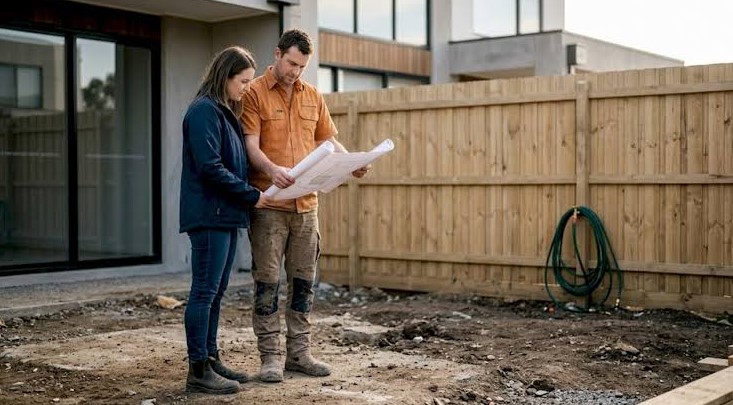
Before any driveway excavation begins, the site needs a realistic plan. This is where many homeowners make a costly mistake. They start shopping by color, shape, or driveway paver cost per square foot before deciding how the surface needs to function.
A driveway is not a patio. Cars are heavier, turning forces are harsher, and the edge conditions matter more. Vehicle rated driveway pavers are different from lighter-use products. Driveway paver thickness, compressive strength, and wear resistance all come into play. In many residential paving projects, contractors will steer clients toward pavers around 60 mm for lighter traffic and 80 mm for typical drive lanes, though exact recommendations depend on the product line, base design, and use conditions. If larger vehicles, frequent delivery trucks, or steep turning areas are expected, heavy duty driveway pavers deserve serious consideration.
Planning also means defining the shape and drainage behavior of the new driveway construction. Will the driveway widen near the garage? Does the apron need replacement? Is the property sloped? Is there existing water pooling on driveway areas after rain or irrigation runoff? In Pasadena and across the San Gabriel Valley, where many homes sit on lots with elevation changes, mature landscaping, and older hardscape, driveway grading before paving is rarely optional. It is central to the design.
A smart contractor will evaluate not just the footprint of the driveway, but how water moves across the front yard, sidewalk connection, curb line, and garage threshold. If driveway drainage design is ignored, even durable driveway surfaces can end up with erosion at the edges, joint sand washout, and recurring puddle prevention problems that never really go away.
Material selection is about performance first, appearance second
This is the stage where homeowners tend to fall in love with the project, and that is fine. Decorative driveway paving should look right for the architecture of the house. Traditional homes often suit brick driveway paving or tumbled paving stone driveways with softer edges and warmer tones. Contemporary driveway paving usually works better with cleaner lines, larger format driveway pavers, and restrained color combinations.
Still, good design starts with function. Slip resistant driveway pavers make sense for sloped properties. Textured driveway pavers can add traction, though they may hold surface dust a little more than smoother finishes. Weather resistant driveway pavers matter in warm climates with strong UV exposure. Southern California paver driveways benefit from paving contractors near me color choices that handle sun well and do not make tire marks or dust overly obvious.
Pattern matters too. Homeowners often ask which driveway paver pattern is strongest. For interlocking paver installation under vehicle traffic, herringbone driveway paving pattern is widely favored because it distributes forces well and resists shifting. Running bond can look clean, but in active drive lanes it generally offers less interlock. Basketweave driveway pavers can be charming in the right setting, but the design needs to suit the expected loads and turning movements.
That is where an experienced driveway paving contractor earns their fee. Good residential paving contractors are not just selling stone. They are matching material, pattern, thickness, slope, border treatment, and edge restraints to the way the driveway will actually be used.
Excavation is where real driveway construction begins
If there is an old slab or asphalt surface, driveway demolition and removal comes first. Some homeowners ask about driveway paving over concrete, and there are niche cases for overlays, but for a true long-lasting paver driveway installation, full excavation is usually the cleaner path. It allows the crew to correct grading, address soft spots, and build the right profile from the subgrade up.
Driveway excavation depth depends on several variables: soil conditions, intended traffic, paver thickness, base material, bedding layer thickness, and local drainage needs. There is no single universal number that fits every property. That said, a contractor who cannot clearly explain how deep they plan to excavate, why that depth is appropriate, and how they determined it, is waving a red flag.
Preparing soil for driveway pavers includes stripping out unsuitable material, roots, unstable fill, and any organic matter that can decay and create settlement later. This part is unglamorous, but it is where many driveway paving installation mistakes begin. If the crew leaves loose soil pockets or fails to account for a previously patched trench line, those weak areas often telegraph upward as sunken driveway pavers months later.
I have walked jobs where the old concrete looked flat enough from the street, but once removed, the underlying subgrade told a different story. One side had been undermined by years of runoff from a downspout. Another section had trench backfill that had never truly compacted. Those are exactly the conditions that make a paver driveway look good on day one and fail on day 300.
The base is the real structure of the driveway
Once excavation is complete, the most important part of paver driveway base preparation begins. The subgrade must be shaped and compacted properly. On some projects, especially where the native soil is weak or moisture-sensitive, geotextile separation or stabilization measures may be recommended. Then comes the compacted aggregate base, installed in lifts and compacted thoroughly, not dumped all at once and skimmed flat.
That phrase, compacted aggregate base, sounds simple. In reality, it is where good driveway paving equipment and crew discipline matter most. Proper compaction takes time. The right plate compactor or roller, the right moisture conditions, and the right lift thickness all matter. Rushed crews tend to chase production. Skilled crews chase density.
A stable driveway base material supports the interlocking system above it. A weak base invites settlement, tire rutting, loose driveway pavers, and edge failure. If the contractor says they will “pack it down” without discussing lift-by-lift compaction, base thickness, or the condition of the subgrade, keep looking.
The bedding layer comes next. This is not a thick leveling cushion meant to hide base irregularities. A driveway paver bedding layer should be screeded evenly and kept within appropriate thickness tolerances. If the crew uses bedding sand to fix deeper dips, that area is likely to compress later. Paver driveway leveling starts with the base, not with excess bedding material.
Water management is not optional
Most paver driveway drainage problems can be traced back to one of three issues: insufficient slope, bad edge transitions, or failure to manage runoff from surrounding surfaces. Even in relatively dry parts of California, sudden storms can expose every weakness in driveway grading and drainage.
A paver driveway slope must move water away from structures while staying comfortable and safe for vehicles and foot traffic. That balance can be tricky near garage slabs, walkways, and side yards. Drainage channels may be needed where the driveway meets the garage or where surface water converges. On some lots, permeable paver driveway systems or pervious driveway paving can be a smart solution, especially when runoff control is a priority.
Permeable concrete pavers are not right for every property, but where drainage is the main challenge, they can help reduce driveway stormwater runoff and improve infiltration. They also require a different base design, often with permeable paver base layers sized to store and move water. A contractor who installs standard interlocking pavers is not automatically qualified to build a true water permeable driveway surface. Ask about system experience.
In Pasadena driveway renovation work, I often see homes where the original hardscape never really accounted for decades of additions, changed landscape grades, and patched drainage fixes. By the time the owner calls for a new driveway, the paving project is also a water management project. Ignore that reality and the surface may look upgraded while the underlying problem stays exactly the same.
Setting the pavers and locking the system together
Once the base and bedding layer are right, the visible installation moves fast. That can mislead homeowners into thinking laying the pavers is the core of the job. It is important, but it is not where the driveway earns its structural reliability.
The crew places the driveway paving stones according to the selected pattern, maintaining straight lines, joint spacing, and edge alignment. Cuts around borders, curves, drains, and aprons should be tight and intentional. Sloppy cuts are more than cosmetic. They often weaken the field and create vulnerable edges.
Paver driveway edge restraints are critical. Without solid edge containment, the interlocking field can spread over time under repeated wheel loads. Good edge restraint details vary by design, but the principle does not change: the pavers need confinement if they are going to act like a unified surface.
After placement, the crew compacts the pavers into the bedding layer. This paver driveway compaction step seats the units, helps establish interlock, and prepares the surface for joint filling. Then joint material, often polymeric sand in many modern installations, is swept and vibrated into the joints. Driveway paver joint filling is not just a cleanup task. It helps lock the system together and resist movement, erosion, and weed intrusion.
What the timeline usually looks like
Homeowners often ask, how long does driveway paving take? The honest answer is that the driveway paver installation timeline depends on size, access, demolition needs, weather, drainage complexity, and whether walls, steps, or lighting are included. A straightforward residential driveway paving job may move from excavation to completion in several days to about two weeks. A more complex driveway replacement process can take longer, especially if drainage work, curb coordination, or extensive grading is involved.
Here is a realistic sequence most professionally installed driveways follow:
- Layout, demolition, and excavation
- Subgrade correction, grading, and base installation
- Screeded bedding layer and paver placement
- Compaction, joint sand installation, and detail work
- Cleanup, final review, and homeowner care instructions
If a paver driveway installation service contractor promises an unusually fast turnaround without carefully explaining crew size, equipment, and quality controls, be cautious. Speed is only valuable when the hidden work is done right.
What drives the cost, and where the money actually goes
Paver driveway installation cost is often higher up front than asphalt and, in many cases, higher than basic poured concrete. That is true. It is also only part of the financial picture.
Driveway paving estimates usually reflect demolition, excavation costs, disposal, base material, pavers, cuts, labor, compaction, edging, and drainage features. Paver driveway labor cost is significant because the work is detailed and physically demanding. Premium driveway pavers cost more than standard concrete driveway pavers. Natural stone driveway pavers cost more still. Complex patterns, borders, inlays, and radius cuts also raise pricing.
In many markets, homeowners will hear rough figures for driveway paver cost per square foot that span a wide range. That range exists because a simple rectangular driveway over easy soil is not the same project as a sloped front entry with drainage channels, custom paver layouts, and difficult access. The number by itself tells you almost nothing without the scope behind it.
The persuasive case for paver driveway long term value is not that pavers are always the cheapest. They usually are not. It is that the lifecycle cost can be attractive when the driveway is built correctly. If one area settles, it can often be reworked locally. If a utility trench has to be opened, the surface can be lifted and reset more cleanly than a slab. If curb appeal matters for resale, decorative driveway paving often has stronger visual impact than plain concrete.
How to hire the right contractor without guessing
This is where many projects are won or lost. The right paver driveway contractors talk comfortably about subgrade preparation, base thickness, compaction methods, drainage paths, and edge restraints. The wrong ones talk mostly about discounts and “beautiful finishes.”
When you meet residential paving contractors, listen for practical clarity. A strong contractor should be able to explain what they are building and why it fits your property. They should also be willing to discuss the risks. Every site has them.
Ask questions that reveal whether they understand real driveway construction stages:
- How will you determine excavation depth and base thickness for my soil and traffic?
- Where will water go during heavy rain, and how are you preventing pooling near the garage?
- What paver thickness and pattern do you recommend for vehicle use, and why?
- How will edge restraints be built at borders, aprons, and transitions?
- If settlement occurs later, what does your repair process and warranty coverage look like?
Those answers matter more than showroom samples. A contractor who can explain paver driveway base preparation in plain language is usually far more valuable than one who simply says they have “been doing this forever.”
Also pay attention to how they estimate. Vague proposals lead to vague accountability. A solid proposal should describe demolition, base work, drainage assumptions, paver type, pattern, and what happens if hidden site issues appear once excavation begins.
The installation mistakes that cause most failures
Most driveway paver installation defects are predictable. They are not mysterious acts of nature. They happen when shortcuts are taken.
Thin or poorly compacted base layers are a common cause of driveway paver settlement. Bad grading leads to paver driveway drainage paver driveway design ideas problems and joint erosion. Weak edge restraints contribute to shifting. Bedding sand used as a patching layer instead of a true screeded setting bed causes uneven driveway pavers. Choosing the wrong product, such as lighter patio pavers for vehicle traffic, can lead to cracking and surface movement.
A lot of homeowners ask, why do driveway pavers sink? Usually the answer is below the pavers, not in the pavers themselves. The visible symptom is settlement. The root cause is often poor support, water intrusion, or both.
Maintenance is straightforward when the installation is sound
One reason paver driveways are worth it for many homeowners is that maintenance is manageable. That does not mean zero maintenance. It means sensible maintenance.
Driveway paver cleaning typically involves regular blowing or sweeping, occasional rinsing, and periodic deeper cleaning when stains or buildup appear. How to clean driveway pavers depends on the issue. Oil stains on driveway pavers respond best when treated early. Pressure washing can help, but it should be done carefully to avoid blasting out joint sand. Polymeric sand driveway maintenance may include topping up joints in areas that see washout or heavy use. Sealing is optional in many cases, but if used, it should match the product and the appearance you want. Some homeowners like the enhanced color; others prefer a more natural finish.
Long term driveway paver upkeep also means watching for early signs of trouble. A slight dip at one wheel path, minor joint erosion near a drain, or small areas of loose pavers are easier and cheaper to correct early than after widespread base failure develops.
Why this is one project you should want done right the first time
A paver driveway is not just a decorative skin over dirt. It is a structural system. When the planning is thoughtful, the site preparation is disciplined, and the contractor knows how to build for drainage and vehicle loads, the result can be one of the best exterior upgrades a homeowner makes. You get curb appeal, repairability, durability, and a surface that feels more custom than most standard paving options.
If you are comparing pavers versus concrete driveways or pavers versus asphalt driveways, do not stop at the surface appearance or the lowest bid. Focus on how the driveway will be excavated, graded, drained, and compacted. That is where durable driveway surfaces are born. The best-looking paver driveway on the block is usually the one built by someone who cared deeply about the parts no one will ever see.